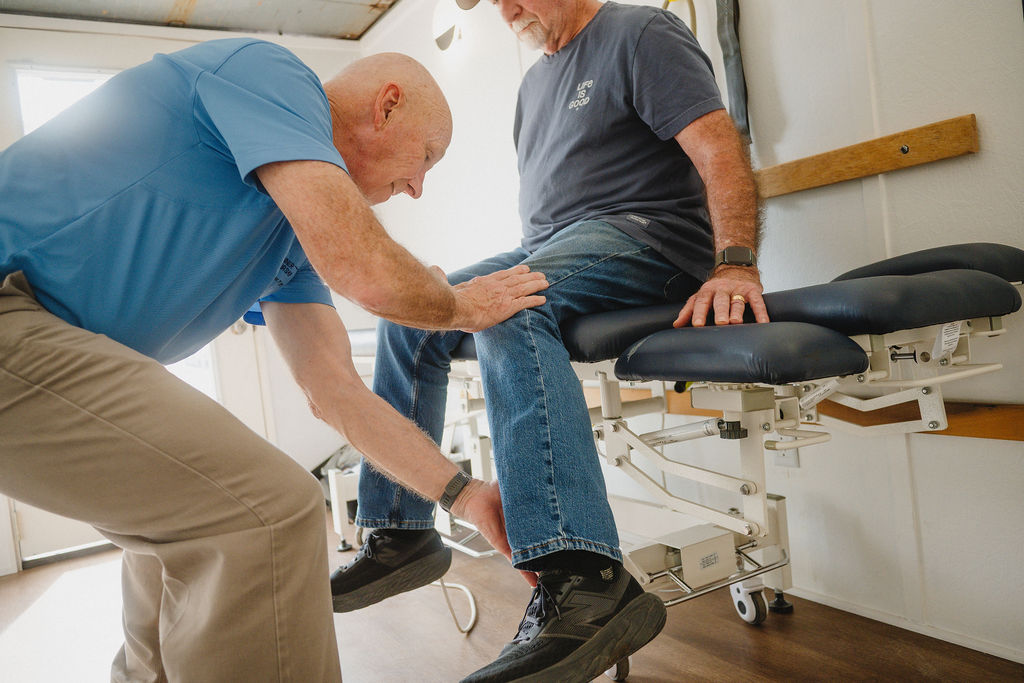
Ken Utzinger, PT, DPT
How I Beat My Plantar Fasciitis
You know the pain. You swing your feet out of bed, take that first step, and it feels like an ice pick in your heel. You hobble to the bathroom, it loosens up a little, and by the time you've had coffee you've almost forgotten about it — until the next morning, when it happens all over again.
When it happened to me, I did what every runner does first. I rested. I bought inserts. I stretched my calf against the wall a few times a week and hoped. And like most runners, I got just enough relief to think it was working — right up until I increased my mileage and it came roaring back.
The turning point was treating it like what it actually is: a load problem. The plantar fascia is strong tissue. It wasn't failing because it was weak or damaged beyond repair — it was being asked for more than it currently had. My calf didn't have the capacity for what I was running, my big toe wasn't doing its share, and rest alone was never going to change either of those.
So I stopped chasing pain relief and started building capacity. That's what actually fixed it — and it's the same approach I use with every runner who comes to me with heel pain now.
What Actually Worked
No gadget, no magic insert. Progressive loading, the right mobility work, and an honest look at my running dose.
- Step 1
Heel raises off a step
Full range, slow lowering. Built up to single leg, then added load. This was the backbone of everything — the fascia and calf needed capacity, not just rest.
- Step 2
Bent-knee heel raises
The soleus is the muscle most runners are short on, and I was no exception. Bent-knee work targets it directly.
- Step 3
Big toe extension work
My big toe barely moved. Restoring that push-off range took real pressure off the fascia with every step.
- Step 4
Wall calf stretch
Heel down, hips square, pressing the heel toward the floor — consistently, not aggressively.
- Step 5
Managing the running dose
I didn't stop running entirely. I cut the dose back to what the tissue could handle and built back up from there. Rest alone is why this injury keeps coming back for so many runners.
The Clinical Side
What I Look For Now
Every runner's plantar fasciitis has its own driver. When you come in, we spend 55 minutes one-on-one finding yours — hands-on, not a handout of exercises you could do at home.
- Ankle, midfoot, and great toe mobility — measured, not guessed
- Calf strength and endurance at multiple knee angles
- Hands-on assessment of the fascia and its insertion
- How you actually run and what you run in
This is my story and general education, not a diagnosis or a treatment plan for your specific injury. If your heel pain has lasted more than a few weeks, get it looked at in person.