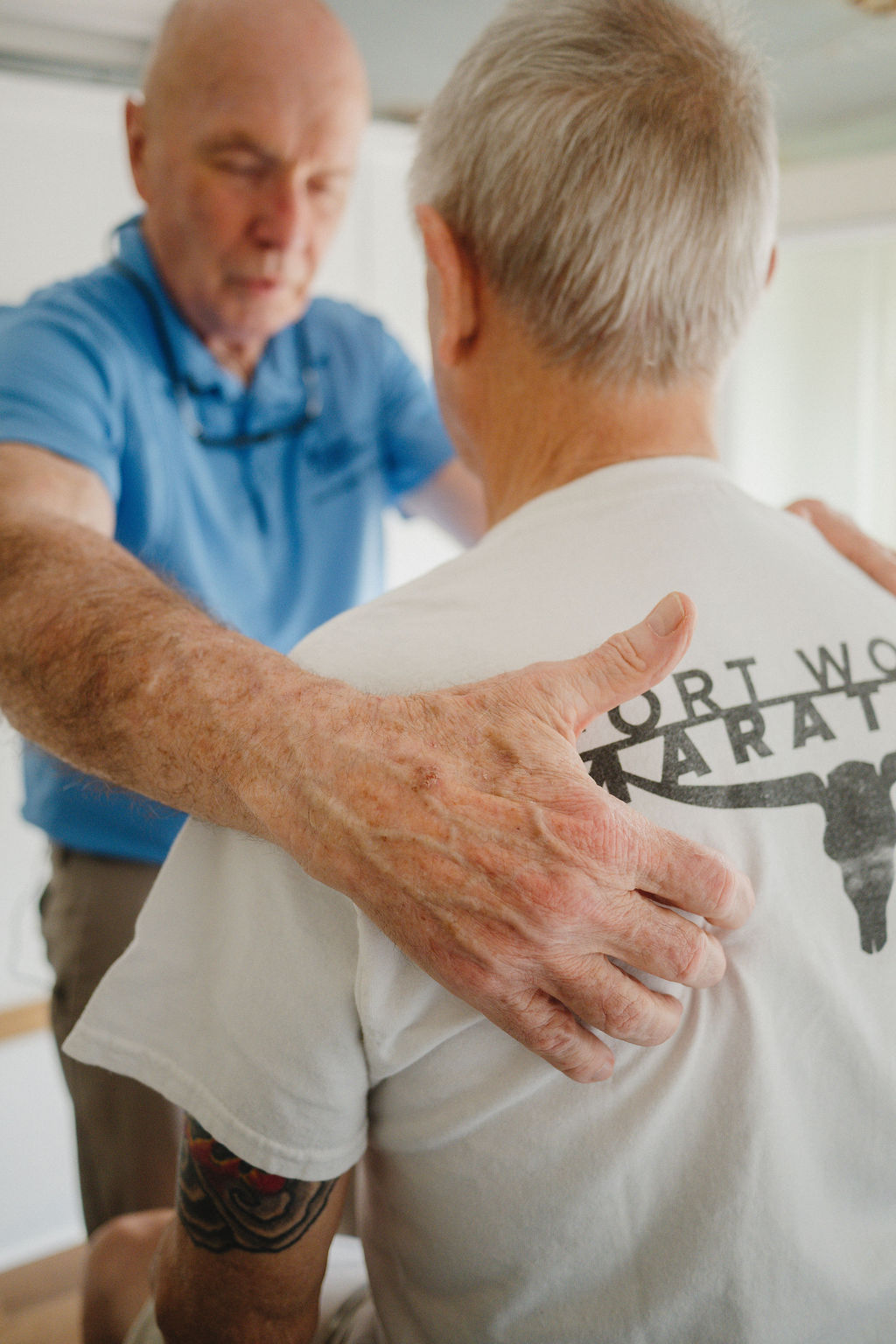
Low Back & SI Joint Pain
Back pain in runners rarely starts in the back. A stiff hip, an ankle that will not bend, or a pelvis that tips forward all force the lumbar spine to absorb what the legs should have.
That is why we test every joint below the lumbar spine, all the way to the great toe, before deciding what the back needs.
What It Feels Like
- Tightness that creeps in around mile six and then locks down
- One-sided pain near the belt line or over the SI joint
- Stiffness getting out of the car or out of bed after long runs
- Pain that eases with walking but returns with running
Why It Happens
- Hip extension and rotation restrictions the spine compensates for
- Weak deep core and glute control at footstrike
- Leg-length or pelvic asymmetry under fatigue
- Long sitting hours between runs
The Evaluation
What We Check In Person
55 minutes, one-on-one, hands-on. No dividing attention between three patients, and no spending most of the hour on exercises you could have done at home.
- Lumbar and SI joint mobility and provocation testing
- Full lower-extremity joint screening down to the great toe
- Core and glute endurance testing under fatigue
- Posture and gait observation from all sides
- Manual therapy to the segments that will not move
Try This At Home First
Start here. If it does not change in two to three weeks, that is the signal you need eyes and hands on it.
Glute bridge march
Trains the pelvis to stay level while a single leg loads.
Hip flexor lunge
Reduces the forward pelvic pull that compresses the low back.
Seated hamstring stretch
Hinge from the hips, back straight, no rounding.
Walk before you run
Use walk intervals to keep the spine moving while capacity rebuilds.
This page is general education, not a diagnosis or a treatment plan for your specific injury.
When To Book An Appointment
- Pain travels below the knee, or you have numbness or tingling
- The same flare-up returns every training block
- Sitting or standing for long periods has become painful
Related Injuries
See all running injuries or browse treatments by body area.